AI-Assisted YouTube Videos: Originality, Disclosure, and Monetization
AI can help you plan, edit, caption, or illustrate short-form videos, but using an AI tool does not automatically make a video original—or automatically disqualify it from monetization. For YouTube, the practical questions are what viewers actually see, whether the work adds meaningful value, and whether realistic synthetic content needs a disclosure. These policies apply to YouTube Shorts; TikTok and Instagram have their own rules, so do not assume a YouTube setting satisfies disclosure requirements elsewhere.
YouTube’s requirements: original, not mass-produced
YouTube says monetized content should be your original creation. If you borrow someone else’s material, you need to change it significantly to make it your own. Channels also must avoid content that is mass-produced, generic, repetitive, or manipulative. YouTube calls the latter category “inauthentic content.” Reviewers can assess a channel as a whole, including its main theme, most-viewed and newest videos, metadata, and About section—not just one upload. See YouTube’s channel monetization policies.
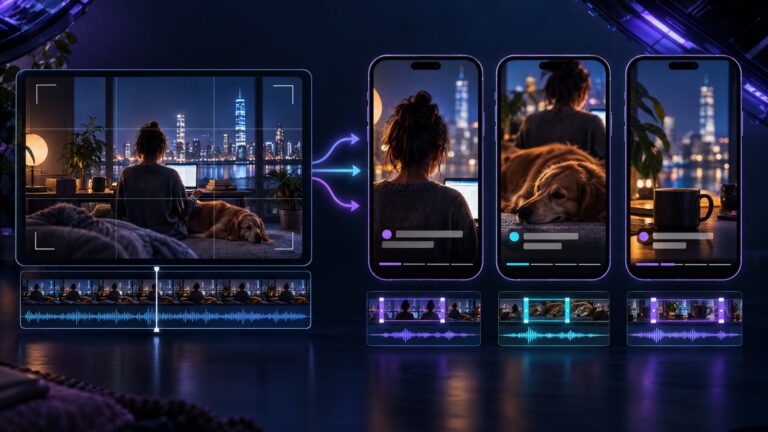
That means “I used AI” is not an originality test. Add your point of view, verify claims, and shape the edit for a specific audience. Near-identical clips from a template—with only a new name, image, or generated voice swapped in—may look mass-produced, even if you made the files yourself.
Shorts have an additional rule for revenue sharing: views of non-original Shorts may be ineligible. YouTube gives examples such as unedited movie or TV clips, reuploads, and compilations without original content added. Its Shorts monetization policy says ad revenue sharing is for monetizing partners who have accepted the Shorts Monetization Module, and views must meet its eligibility rules. A disclosure or caption does not grant rights to footage or music you do not own.
When YouTube requires synthetic-content disclosure
YouTube’s disclosure is narrower than “mark every video that involved AI.” It requires disclosure for AI-generated or altered content that seems realistic in specified situations: making a real person appear to say or do something they did not, altering footage of a real event or place, generating a realistic scene that never happened, or creating music that is the video’s main focus. The rule covers content made fully or partly with AI. YouTube says non-realistic content and minor edits do not require disclosure under this policy. Read the current examples in YouTube’s GenAI disclosure guidance.
For example, an animated dragon in a fantasy Short differs from a photorealistic “news” clip showing a real mayor announcing a fictional emergency. The second depicts a realistic event that did not happen, so select Yes under “AI use” in YouTube Studio. A script outline, ordinary cuts, or caption cleanup alone is not a listed trigger; review the finished audio and visuals for realistic synthetic material. If uncertain, consult YouTube’s examples.
When you disclose, YouTube adds an “altered or synthetic” label. The platform may also label some content automatically, including content made with its generative tools or detected by its systems. YouTube says disclosure by itself does not limit a video’s audience or affect its eligibility to earn money. Repeatedly failing to disclose when required can lead to a label applied by YouTube or penalties, including removal or suspension from the YouTube Partner Program. A disclosure is therefore a transparency step, not a substitute for originality, rights clearance, or other policy compliance.
A practical workflow before you publish
Use this quick review for each Short:
- Make the contribution clear. Add your own explanation, reporting, demonstration, humor, critique, or story. If the same video could be produced by changing only a name or image, rethink the format.
- Check every borrowed asset. Confirm that you have permission or another valid basis to use footage, images, music, and clips. Credit alone does not necessarily give you rights, and an edit does not automatically make reused material eligible for monetization.
- Review the finished cut for realism. Ask whether AI made a real person appear to speak or act falsely, changed real-world footage, depicted a realistic event that never occurred, or generated the video’s main music. If yes, use YouTube’s “AI use” disclosure during upload.
- Make repeatable formats genuinely distinct. Keep a consistent visual identity if useful, but vary the substance: your examples, analysis, demonstrations, and conclusions should change because the topic changes—not just the labels in a script template.
- Check each platform separately. Save a clean master and review the destination platform’s current disclosure, music, and monetization rules before cross-posting to TikTok or Instagram Reels.
What this means for monetization
AI assistance alone is not a guarantee of approval or a barrier to earning. YouTube’s rules consider originality, reused material, advertiser suitability, and channel-level patterns, among other requirements. A compliant synthetic-content disclosure does not make a repetitive channel original, and original work does not guarantee acceptance into the YouTube Partner Program or any particular income. Build for viewers first: publish work you can explain, substantiate, and stand behind, then check YouTube Studio and the linked policies as they change.